Bamboo and rattan basketry is more than a craft—it’s a timeless art form that weaves together functionality, beauty, and cultural heritage. For thousands of years, artisans across the globe, particularly in Vietnam, have transformed these natural materials into baskets that serve both practical and decorative purposes. At Ethical Handicraft Manufacturer (EHM), we celebrate this enduring tradition, crafting high-quality, sustainable products that honor Vietnam’s rich legacy of bamboo and rattan weaving. This article explores the historical roots, materials, techniques, cultural significance, and modern applications of bamboo and rattan basketry, showcasing its relevance in today’s world.
Historical Significance of Bamboo and Rattan Basketry
Bamboo and rattan basketry is deeply intertwined with human history, serving as a bridge between past and present. These crafted items are not just containers but vessels of tradition, carrying stories, values, and ingenuity across generations.
Ancient Origins
The craft of basketry dates back to prehistoric times, with archaeological evidence from Southeast Asia, including Vietnam, suggesting its practice as early as 40,000 years ago. Early humans recognized the strength of bamboo and the flexibility of rattan, using them to create sturdy, versatile containers for daily tasks like gathering, storing, and transporting goods.
Techniques Passed Down: Basket weaving has traditionally been an oral craft, with knowledge handed down from elder to younger artisans. This ensures the preservation of core techniques like plaiting, twining, and coiling, even as the craft evolves.
Cultural Resonance: In Vietnam, distinct weaving styles reflect regional identities. For example, artisans in the Mekong Delta create intricate patterns for household baskets, while those in the northern highlands craft robust agricultural tools.
Symbolic Designs: Patterns in Vietnamese basketry often carry deep meanings, from representations of nature to symbols of prosperity and community unity, making each piece a canvas of cultural expression.
Influence of Trade and Cultural Exchange
Vietnam’s position as a historical trade hub in Southeast Asia enriched its basketry traditions. Pre-colonial trade routes connected Vietnamese artisans with Chinese, Indian, and Southeast Asian cultures, introducing new techniques, materials, and designs.
Material Innovation: Trade brought access to dyes and fibers, allowing artisans to experiment with vibrant colors and durable weaves.
Technique Fusion: Techniques like twining, borrowed from neighboring regions, were adapted to create more complex, multi-functional baskets.
Cultural Motifs: Artisans incorporated foreign motifs, blending them with traditional Vietnamese designs to create hybrid styles that reflect a confluence of cultures.
Traditional Uses of Bamboo and Rattan Baskets
In Vietnam, bamboo and rattan baskets are integral to daily life, serving practical, cultural, and ceremonial roles.
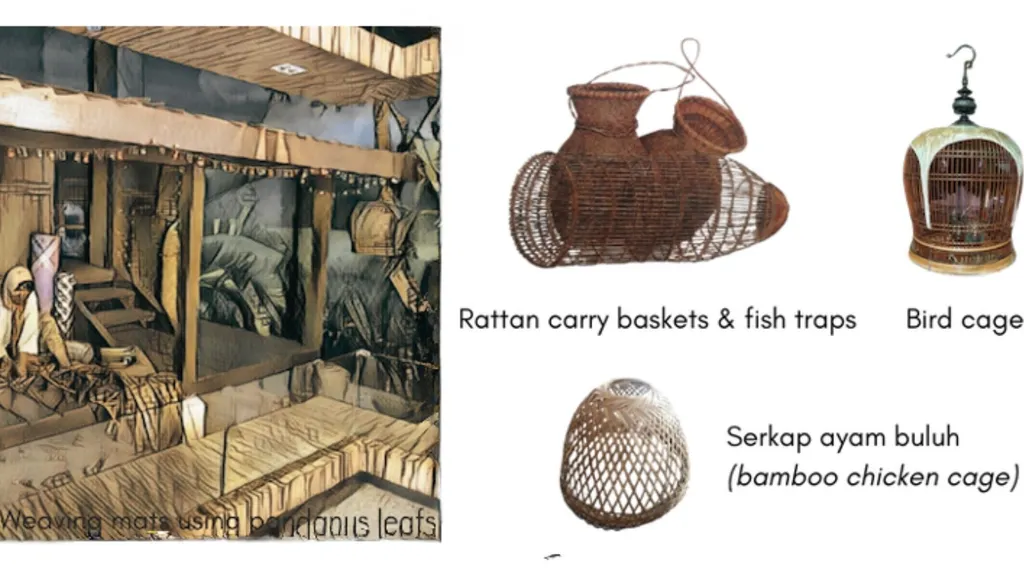
Agricultural Use: Farmers rely on large baskets, such as the gio or thúng, to carry crops like rice, vegetables, and fruits from fields to markets.
Domestic Applications: Households use baskets for storing food, household items, or as decorative pieces, showcasing their versatility.
Fishing and Aquaculture: In coastal and riverine communities, bamboo and rattan baskets serve as fish traps and storage for fishing gear, valued for their water resistance.
Cultural and Ritualistic Roles: Intricately woven baskets feature in Vietnamese weddings, festivals, and harvest ceremonies, symbolizing abundance and prosperity.
Materials in Bamboo and Rattan Basketry
The choice of materials is central to the craft, with bamboo and rattan offering unique properties that make them ideal for weaving.
Bamboo: Strength and Flexibility
Strength: Bamboo’s tensile strength, comparable to steel, makes it perfect for heavy-duty baskets.
Flexibility: Its ability to bend without breaking allows artisans to create varied shapes, from simple storage baskets to intricate decorative pieces.
Lightweight and Sustainable: Bamboo’s rapid growth and minimal resource needs make it an eco-friendly choice, aligning with EHM’s commitment to sustainability.
Rattan: Pliability and Durability
Lightweight: Rattan’s lightweight nature enhances portability, ideal for market baskets.
Durability: Its resilience ensures baskets withstand repeated use.
Flexibility: Rattan’s pliability allows for intricate designs, fostering creativity.
Sustainability: Harvesting rattan does not harm the plant, ensuring a renewable supply.
Complementary Fibers
Vietnamese artisans often combine bamboo and rattan with other natural fibers to enhance texture and aesthetics:
Seagrass: Adds a rustic texture and durability.
Water Hyacinth: Offers softness and unique color for visual appeal.
Abaca: Known for its strength, this banana-derived fiber enhances basket durability.
Weaving Techniques and Methods
The artistry of bamboo and rattan basketry lies in its weaving techniques, refined over centuries to balance strength and beauty.
Plaiting and Twining
Plaiting: Involves weaving strips over and under to create flat, uniform surfaces. This technique is used for mats and sturdy baskets, often featuring geometric patterns.
Twining: Twists multiple strands in a spiral pattern for durable, flexible baskets. Twined baskets are ideal for heavy loads like agricultural produce.
Stitching Techniques
Binding Stitch: Reinforces basket edges with wrapped strips, adding strength and a polished finish.
Lacing Stitch: Threads strips through the weave to join parts or add decorative accents, such as handles.
Coiling Stitch: Wraps strips around a central point to form round baskets, ensuring a compact structure.
Regional Variations in Vietnam
Vietnam’s diverse regions showcase unique weaving styles:
Mekong Delta: Known for intricate, lightweight baskets used in daily life.
Northern Highlands: Focus on robust, functional baskets for agriculture.
Central Vietnam: Features conical hats (nón lá), blending practicality with cultural symbolism.
Cultural Significance of Basket Weaving
Basket weaving in Vietnam is a cultural cornerstone, reflecting identity, spirituality, and community cohesion.
Symbolism in Patterns
Nature-Inspired Motifs: Designs like lotus flowers or rice fields symbolize harmony with nature.
Geometric Patterns: Represent community unity or prosperity, showcasing artisans’ skill.
Cultural Emblems: Motifs like dragons or phoenixes connect baskets to Vietnamese mythology and heritage.
Community Involvement
Basket weaving fosters social bonds in Vietnamese villages:
Intergenerational Learning: Elders teach younger generations, preserving techniques and stories.
Communal Workshops: Villages host weaving gatherings, strengthening community ties and sharing innovations.
Cultural Festivals: Events like Tet feature basketry displays, celebrating Vietnam’s craft heritage.
Cultural Preservation
Basketry preserves Vietnam’s cultural narratives:
Traditional Techniques: Continuous practice maintains weaving methods unique to each region.
Storytelling: Patterns encode legends and historical events, keeping stories alive.
Economic Empowerment: Sales through cooperatives like EHM support artisans’ livelihoods, sustaining the craft.
Contemporary Applications
Bamboo and rattan basketry remains vibrant, adapting to modern needs while retaining its cultural essence.
Modern Art and Design
Sculptural Works: Vietnamese artisans create decorative pieces like wall hangings and lighting fixtures, blending traditional weaves with modern aesthetics.
Cultural Fusion: Collaborations with designers produce innovative products, such as minimalist furniture, appealing to global markets.
Sustainability and Eco-Friendliness
Renewable Materials: Bamboo and rattan’s rapid growth supports sustainable production.
Low Impact: Harvesting and crafting minimize environmental harm, aligning with EHM’s eco-friendly mission.
Circular Economy: Using scraps and biodegradable materials reduces waste.
Commercialization and Global Trends
Market Growth: Demand for sustainable products drives the global bamboo and rattan market, projected to reach significant value by 2033.
Fair Trade: EHM’s fair trade practices ensure artisans receive fair wages, promoting ethical consumption.
E-commerce: Online platforms expand market reach, connecting Vietnamese artisans with global consumers.
Challenges Facing Bamboo and Rattan Basketry
Despite its resilience, the craft faces modern challenges:
Modernization: Urbanization draws younger generations away from traditional crafts, risking knowledge loss.
Mass-Produced Alternatives: Cheaper, machine-made goods compete with handmade baskets, challenging economic viability.
Knowledge Preservation: Lack of formal training programs threatens the transmission of skills.
Future Perspectives
The future of bamboo and rattan basketry is bright, with opportunities for growth and innovation:
Innovative Designs: Advances like bamboo scrimber enhance durability, enabling new product forms like furniture and decor.
Education and Workshops: EHM supports training programs to teach traditional and modern skills, engaging young artisans.
Collaborations: Partnerships with designers create products that blend heritage with contemporary appeal, expanding market reach.
Bamboo and rattan basketry is a testament to Vietnam’s cultural richness and artisanal skill. At Ethical Handicraft Manufacturer, we are committed to preserving this age-old craft while embracing innovation and sustainability. By honoring traditional techniques, supporting artisans, and adapting to modern markets, we ensure that bamboo and rattan basketry continues to thrive as a symbol of heritage, creativity, and environmental responsibility. Join us in celebrating this timeless art form, where every weave tells a story of tradition and resilience.